

When a Building Inspection Raises Structural Questions
Home buyers and homeowners
When a building inspection raises a structural question, find out what the inspector observed and what could not be established. Use that information to commission the next assessment around the actual concern. A referral does not diagnose the cause, mean the house is unsafe or tell a buyer whether to proceed.
For an on-site assessment of a specific building concern, explore our forensic site inspections. An article cannot determine the cause or appropriate solution for an individual property.
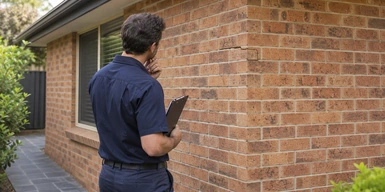
Different reports are commissioned to answer different questions
A valuation and a condition inspection answer different questions. A broad inspection can identify visible issues and recommend a specialist assessment without establishing which support moved or why. Check the purpose of the actual appointment and which areas or elements it excluded before relying on its findings.
Check what prompted the referral. If the inspector observed a stepped crack, that is evidence of visible damage at a place. If an owner reports that it grew, that is history to compare with dated or measured evidence. If the report suggests a hidden footing has moved but the support was not accessible, the explanation remains to be tested. Finding these statements together does not give them equal evidential status.
Turn the concern into a question an engineer can test
Ask for the location, visible pattern and reason for escalation. Possible progressive movement calls for a different inquiry from deterioration in a particular beam, or an unknown support over an altered opening. A general request to check the house may produce a repeat of visible observations rather than an assessment of the mechanism that matters to the decision.
For example, a stepped crack beside an extension may relate to the junction, differing supports, changes to drainage or a more local feature in the wall. A photograph can show where it lies, and earlier plans can indicate when or how the junction was formed. Next, the engineer needs to examine which parts of the building the damage crosses and which construction and history could explain it. It is not enough that the extension is the newest part of the house.
A referral about deterioration at a timber bearing is different. If the original visit could see the exposed beam but not its end, the uncertainty is at a point where the load is handed to the next support. Ask whether that area can be inspected and what the evidence would allow the engineer to conclude. The fact that most of the beam looks undamaged does not extend the evidence into the concealed bearing.
The first specialist visit may resolve some questions and expose others
Use an engineer experienced in the structure and issue. If the evidence suggests a drainage fault, susceptible ground or vegetation involvement, coordinated specialist work may be useful. That should follow a question the first appraisal identifies. It is not necessary to commission every possible test merely because a general report recommended further assessment.
Agree what the visit covers and whether levels, access to concealed elements or further subsurface investigation might be needed. For instance, a single floor survey can identify which part is higher or lower today. It cannot establish on its own that the low part recently fell. An older comparable survey or later repeat observations address that timing question. Knowing this before commissioning the visit keeps a survey from being mistaken for proof of cause.
A different type of question may be resolved quickly if a relevant connection is exposed and accessible. If not, the engineer should identify what is hidden and whether that gap prevents the conclusion. A targeted assessment is valuable even when its result is a better-defined next investigation rather than a finished diagnosis.
Consider whether the uncertainty concerns present condition, past history or future behaviour. A focused visit might identify a deteriorated connection and explain why it needs assessment now. The same visit may not establish whether a hairline on a separate wall has changed over several seasons. Agree which symptom the first visit will address and what additional evidence the other issue would need if it affects the buyer's decision.
State what must be known before the purchase decision
Tell the assessor when you need the advice and what decision depends on it. A deadline does not make an unsafe area accessible or allow a longer-term change to be verified in one visit. Ask which findings can be established immediately and which would require permissions, records, specialist testing or later observations. Raise a suspected immediate hazard promptly rather than waiting for ordinary purchase discussions.
Give the engineer the earlier report, useful photographs and any relevant repair history. The follow-up should explain what makes the observed pattern more consistent with one explanation than another, or why that distinction cannot yet be made. It should distinguish physical condition from the separate purchase, contract and affordability decisions.
A useful follow-up can recommend proceeding with a limited technical step, such as confirming a support detail, without committing the client to excavation or design. Conversely, if a decision depends on a hidden detail and access is refused, state the consequence of that limit. A better phrased report cannot substitute for physical evidence.
What a useful structural referral includes
- The inspection purpose, relevant findings and any inaccessible or excluded elements.
- The property decision that requires an answer and the particular symptom or construction feature it depends on.
- Dated views and earlier reports that locate related work, damage or alterations.
- The access and time available for further checks, with unresolved conditions expressed plainly rather than assumed satisfactory.