
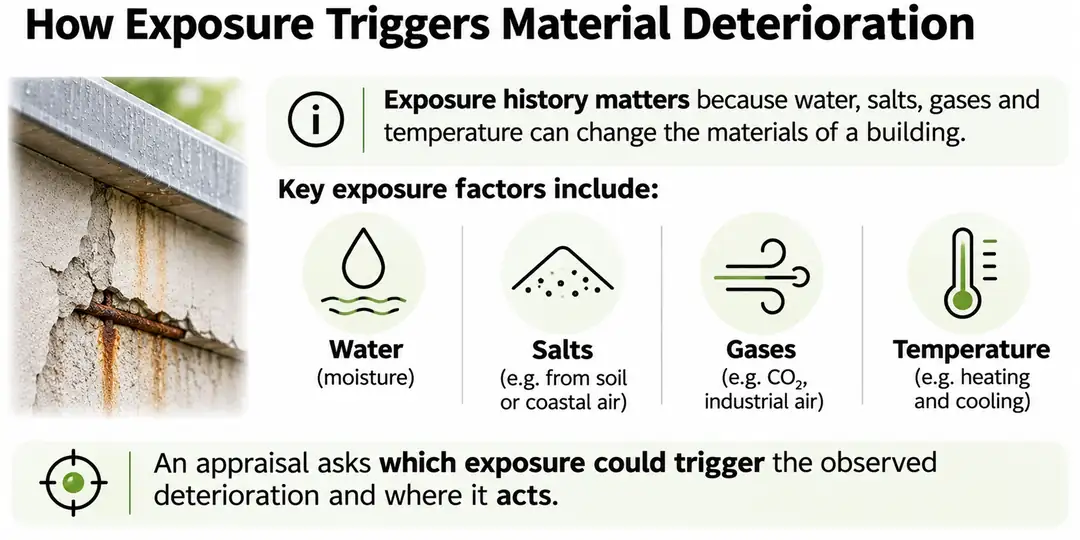
How Exposure Triggers Material Deterioration
Homeowners and property managers
Exposure history matters because water, salts, gases and temperature can change the materials of a building, not only the ground supporting it. An appraisal asks which exposure could trigger the observed deterioration and where it acts. That is a different task from locating a leak or maintaining a general rain diary.
If cracking or movement is affecting your property, explore our investigation of cracking and building movement. An article cannot determine the cause or appropriate solution for an individual property.
The Local Exposure Can Differ From the Building
Even a generally dry building can have a persistently damp member end, crevice or sheltered surface. Local exposure can make corrosion more severe than the wider environment suggests. Record conditions at the affected material rather than calling the whole property wet or dry.
Note how long the material stays wet and whether it repeatedly wets and dries. Cycling can cause porous materials to change dimensions and can be more damaging to some coatings than continuous exposure. A photograph of a wet area does not establish the rate of deterioration.
Masonry and Timber Respond Differently
Water can carry salts into masonry, where they can crystallise beneath the surface and cause damage. Trapped moisture can also contribute to deterioration where freezing occurs. Runoff over stone and incompatible repointing can affect particular units and joints.
Moisture can support biological deterioration of timber, including near a bearing that looks sound from outside. Timber species, the presence of sapwood and the local exposure matter. A note that the room was damp cannot replace an appraisal of the affected timber.
Metal and Concrete Need Different Evidence
Assess the corrosion type, local moisture and protective system alongside the remaining metal section. Corrosion in a crevice or built-in end can have different implications from widespread surface rust. A change in building use can also alter the exposure.
Carbonation can lower concrete alkalinity and reduce protection for reinforcing steel. Chlorides can promote corrosion even where alkalinity is high. Sulfates or acids can attack the concrete itself. Investigate the relevant exposure and mechanism rather than assuming a crack noticed after rain is due to settlement.
Make the Exposure Record Answer a Material Question
Record what was exposed, where and under what conditions. A persistently damp member end, contact with salts or a change in building process can be relevant, as can coating breakdown or earlier repairs. Focus on information that helps test a plausible deterioration mechanism.
An exposure history remains evidence of conditions, not proof of structural cause. Material identity, construction and condition still need assessment. The resulting advice may concern deterioration, support or further investigation; this article does not prescribe waterproofing products, sealing details or a homeowner method for diagnosing water entry.
Useful Next Steps
- Record the local exposure of the affected material rather than just describing the building as wet or dry.
- Note relevant changes in use, exposure to salts or chemicals, and the condition of protective systems.
- Ask which material deterioration mechanism the exposure record helps investigate. Keep that separate from diagnosing a leak or foundation movement.