

Cracks After Nearby Construction or Vibration: How to Build a Timeline
Homeowners and building professionals
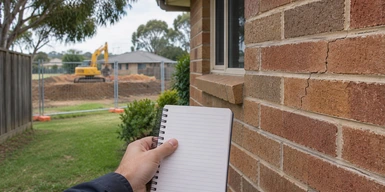
For cracks noticed after nearby construction, make a timeline of the activity, what was felt or observed, and the earliest reliable evidence of the cracks. A felt vibration before discovery is a reason to investigate, not proof of damage. A useful timeline also identifies excavation, changed support, drainage and other work that could affect the building even if vibration was the most noticeable event.
If cracking or movement is affecting your property, explore our investigation of cracking and building movement. An article cannot determine the cause or appropriate solution for an individual property.
Separate experience from measurement
Describe the activity as precisely as you can without guessing the equipment or work method. State when and where you heard or felt a particular event and whether anything physically changed at the time. A rattling window, a new crack that someone saw form and a line discovered days later are different observations. A phone video can corroborate timing or show movement of an object in view; it is not a calibrated ground or building vibration record.
People can feel vibration that does not damage a structure. Conversely, the effect on a building depends on the actual vibration and the vulnerability of the affected elements, not on how strongly someone describes it. If specialist measurements are available, check where they were taken, which activity they cover and what frequencies were present. A number from another building or stage does not describe this event.
What does the earlier condition evidence actually date?
Label 'first seen' as discovery. An earlier photo of the same surface in which the line would have been visible can narrow the period in which it formed or became visible. Check whether the area was accessible, whether a finish or furniture concealed it and whether the earlier image resolves it. Even a clear earlier view and a later view with a crack leave an interval. Events within that interval still need to be linked to what happened.
For example, a line found behind a bookcase during pile driving may already be present in a photo from before the furniture was placed. That would change the question from whether the crack started during work to whether it subsequently reopened or grew. If there is no comparable earlier view, say so. A noted old repair with a visible new split is evidence of local change; it does not say that all movement in the wall happened during the recent work.
Distinguish vibration, ground densification and other effects
Vibration can act directly on finishes or other vulnerable parts of a building. It can also densify susceptible loose granular ground, changing foundation support. A delay or a pattern that spreads can prompt a check of the ground response rather than a search for the largest vibration event alone. Soil type, construction activity and the footing arrangement matter to whether the second mechanism is plausible.
Excavation beside a building can change lateral restraint or supporting ground. Temporary works can change which elements carry load. Drainage changes can redirect water into an area of fill or through a trench. These processes may overlap in time with noisy work and are not excluded by showing that there was some vibration. Put each relevant change on the same timeline so the assessor can compare their positions and effects.
Ask what would distinguish the main explanations. A known event with an appropriately located measurement may help test direct vibration. Changes concentrated beside an excavation may instead require review of the actual cut, support sequence and ground conditions. A newly documented surface depression and relative distortion in the nearby building can direct attention to foundation support. None of those observations is a universal identifier. The chosen explanation should account for where the movement occurred and the history of the affected construction.
Give the engineer observations that can be compared
Mark each symptom on a plan and keep views of the relevant parts of the building, including locations without visible change where they help define the extent. An overview of an elevation may show that a door corner crack is part of wider distortion, while a close-up can locate the separation precisely. State the evidence gap where the record begins after the relevant work. The engineer can assess a plausible physical relationship; questions about responsibility or liability are separate.
Sudden instability, ground loss or falling material needs prompt assessment and appropriate emergency or utility assistance where needed. Keep away rather than waiting to complete the chronology or record another vibration.
The entries that make the timeline useful
- The activity, location and date, with observed events separated from what was heard or felt.
- The earliest comparable condition evidence and the interval it does and does not establish.
- Changes in support, excavation, loading and drainage alongside any available vibration observations.
- The symptom location and the specific evidence that could link or separate the competing mechanisms.