

Plaster Cracks and Brick Cracks Why the Material Matters
Homeowners and buyers
A crack in a plaster finish and a crack through masonry do not necessarily describe the same problem. Finishes, framing and supporting walls respond differently to temperature, moisture and load. Recording the material helps an engineer understand which part of the building is showing the symptom.
For an assessment of recurring leaks or other building defects, explore our building defects inspections. An article cannot determine the cause or appropriate solution for an individual property.
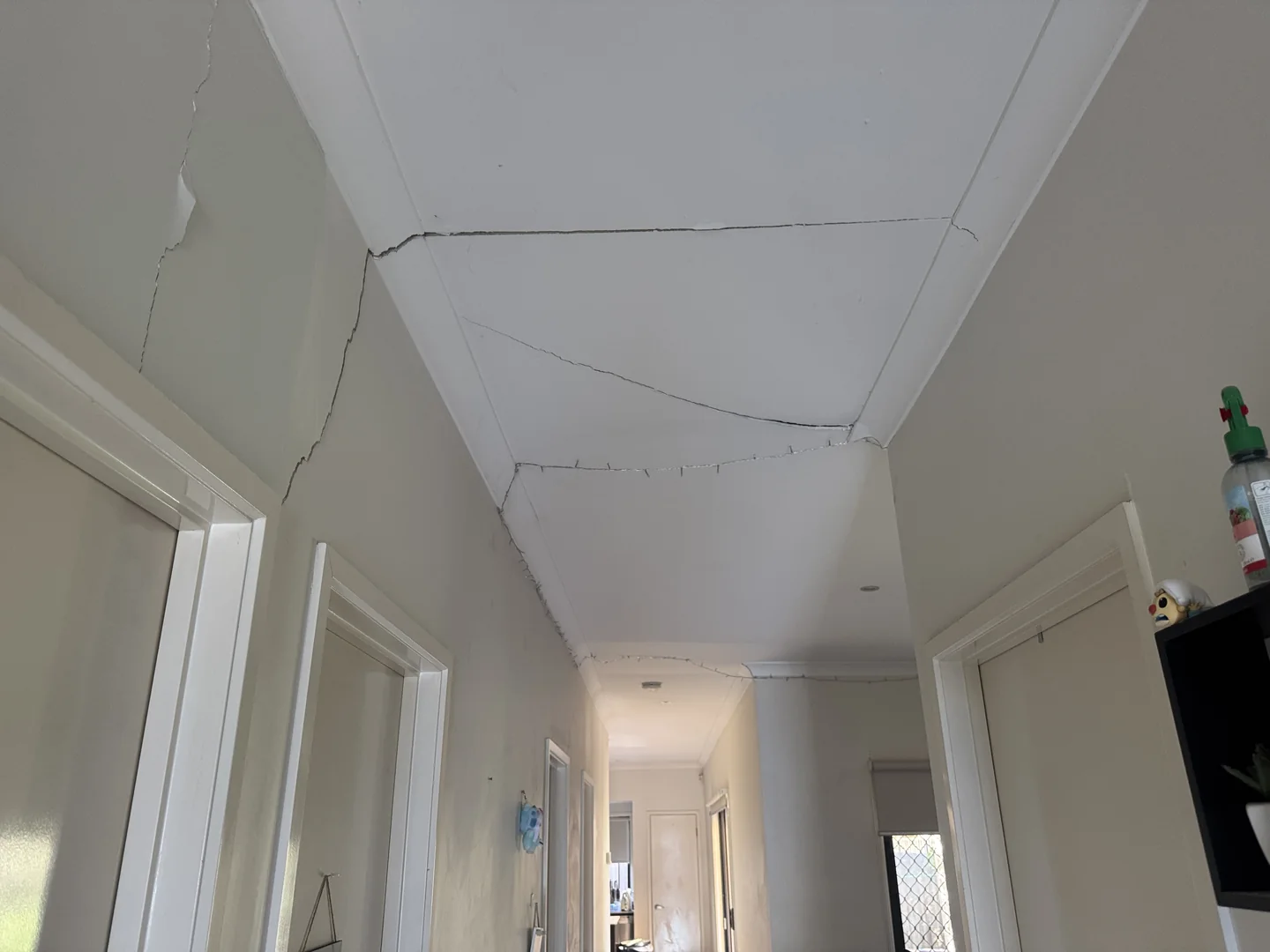
Identify the affected layer
Name the material you can see: plasterboard lining, plaster finish, render, mortar joint, brick or concrete. If you cannot tell what is behind the finish, record it as unknown. Do not remove linings just to make the first record.
Where damage is visible on both sides, record each side separately and link the observations on a plan if possible. Matching patterns can help, but finishes and construction can obscure them. A lack of matching visible cracks does not show the supporting structure is unaffected.
Materials can move without foundation settlement
Drying shrinkage, thermal movement and long-term deformation under load can affect finishes. Timber support can sag or shrink, and a brittle lining may crack where the support moves. New finishes may also change as materials dry.
The stud-wall photograph shows an example not attributed to subsidence. It illustrates why the crack location and the support system matter; a similar-looking crack elsewhere does not establish the same cause or mean that filling is sufficient.
Masonry adds different questions
In brick or block walls, note whether mortar joints have opened, units have fractured or the wall bows. Possible damage mechanisms include corrosion of embedded steel, weathering and poor detailing. Openings and restraints can concentrate the visible effects.
Render can conceal the joints beneath it. A visible crack may be in the finish, reflect moisture damage or follow movement behind the render. Describe what you can see and leave the inspection to establish which layers are affected.
Preserve the distinction in your evidence
Give different affected materials separate issue IDs and link them on a plan if they share a location. Date the observations and include repairs or changes in room use. This makes the record more useful than labelling everything a wall crack.
Clear material descriptions help an engineer focus the assessment. An online crack chart cannot account for every form of construction and detail and should not be used as a universal repair or safety guide.
Useful Next Steps
- Name the visible material and note any construction you cannot identify.
- Photograph the wider area as well as the cracked surface.
- Cross-reference related symptoms without assuming they have the same cause.
- Separate what you observed from conclusions about structural significance.