

What a Structural Appraisal of an Existing Building Answers
Building owners and buyers
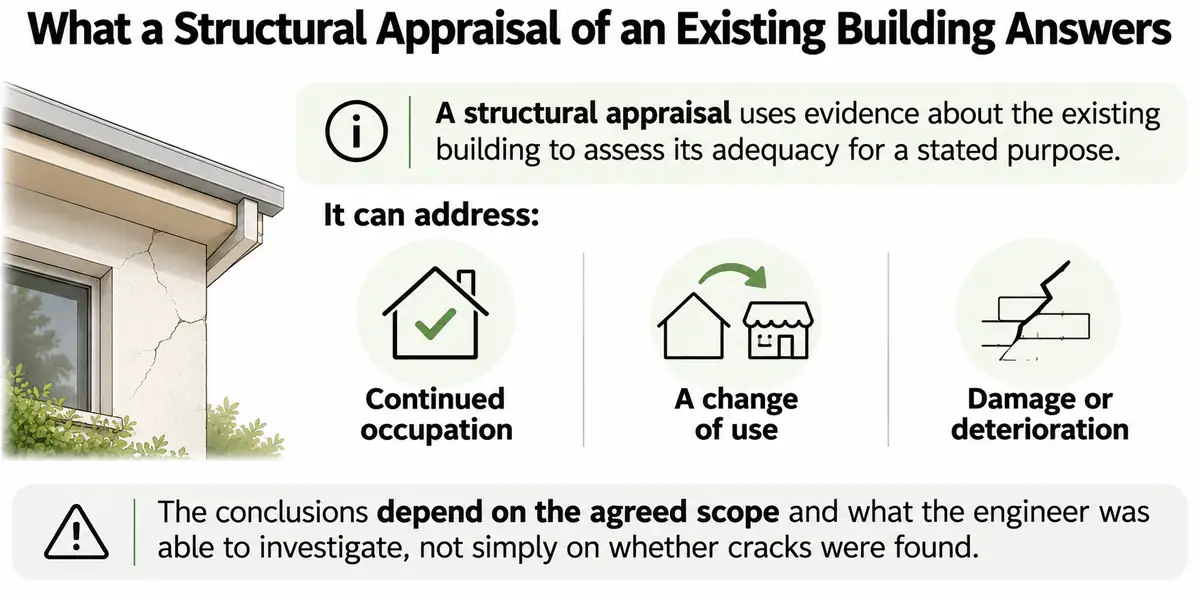
A structural appraisal uses evidence about the existing building to assess its adequacy for a stated purpose. It can address continued occupation, a change of use, damage or deterioration. The conclusions depend on the agreed scope and what the engineer was able to investigate, not simply on whether cracks were found.
To discuss an engineering review of existing reports and documents, explore our desktop engineering reviews. An article cannot determine the cause or appropriate solution for an individual property.
Name the Decision the Appraisal Must Support
The appraisal asks whether the structure is adequately safe and whether it can serve its intended purpose now and in the future. A purchase appraisal, a damage investigation and an assessment for a different use can need different evidence even for the same building.
Describe the decision before choosing the inspection scope. Asking whether a particular use can continue is more precise than requesting a general assurance that everything is sound. Bankside Power Station, now Tate Modern, is an example of building reuse, not evidence of how the adequacy of that particular building was established.
Examine More Than the Visible Surface
Visible distress is useful evidence, but adequacy also depends on strength, stiffness, stability and durability, and on how the structure responds if a component is weakened. A local defect can have different consequences in different arrangements. No obvious distress does not prove safety.
The engineer considers what the building was designed and built for, how its condition has changed and whether alterations or changes nearby have affected it. Drawings, measurements, inspection and any necessary tests inform that assessment, but the results still need to be interpreted in terms of how the building works.
Keep Present Condition Separate From Future Assumptions
An appraisal for current use does not automatically cover higher loads or a changed layout. Past performance has to be read against earlier loads, deterioration and future use. Where deterioration is progressing, satisfactory performance so far may say little about what comes next.
The conclusions should state their conditions, including any assumptions about future service life and acceptable maintenance. Inconclusive evidence may call for more investigation or a revised brief, not a wider conclusion from the same limited information.
Understand What Was Actually Included
The term 'structural survey' can mean different things. Agree the depth and scope of the inspection, available access and decisions the report will address instead of relying on the label.
The report should answer the brief, distinguish findings from interpretation and state restrictions or uninspected areas. Seek separate advice on matters outside the appraiser's competence. Significant danger discovered during the appraisal still needs prompt attention, even if it was not part of the brief.
Useful Next Steps
- State the intended use and the decision the appraisal needs to support.
- Agree what the engineer can inspect and any access limits before relying on a general inspection label.
- Check what applies to current use and what depends on future loads, maintenance or more investigation.