

Appraising an Older Timber Floor or Roof
Homeowners and building professionals
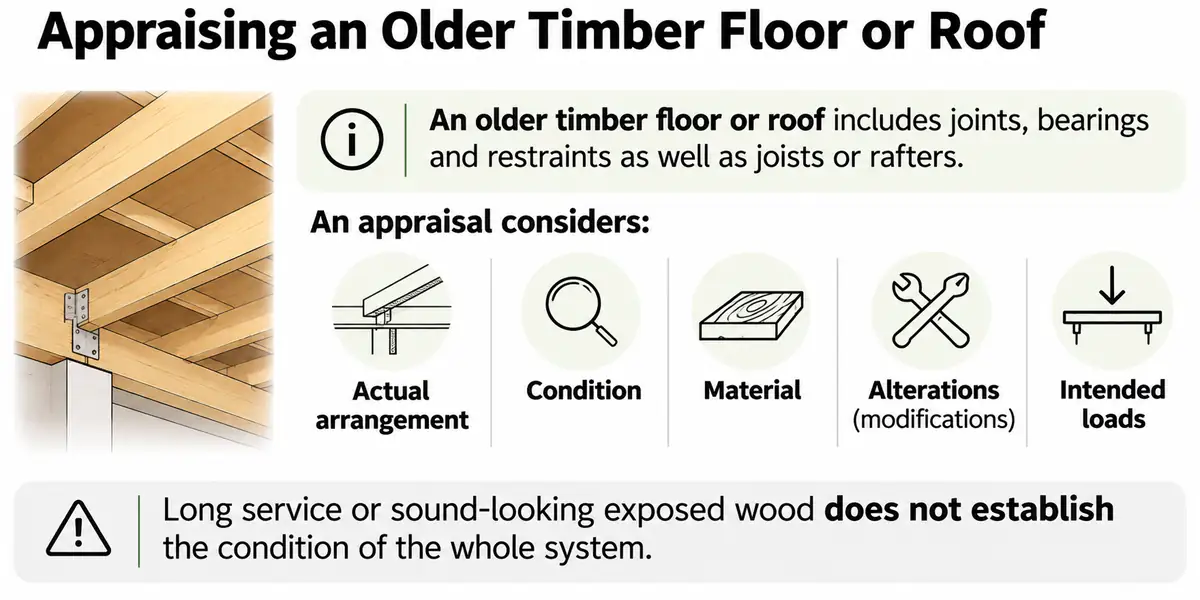
An older timber floor or roof includes joints, bearings and restraints as well as joists or rafters. An appraisal considers their actual arrangement, condition, material, alterations and intended loads. Long service or sound-looking exposed wood does not establish the condition of the whole system.
For an on-site assessment of a specific building concern, explore our forensic site inspections. An article cannot determine the cause or appropriate solution for an individual property.
Establish What Was Built and What Changed
Drawings can show the intended arrangement, but some details need checking on site. Later services, removal of supports or changes in use can alter the original design assumptions. Include known alterations and present or proposed loads in the brief.
Notches, rebates or old profiles may suggest that timber was reused and predates the building. Construction dates and visual clues do not by themselves establish the timber species in an Australian property.
Material Identity Is Not a Strength Grade
Hardwood and softwood are botanical terms, not structural strength rankings. Species, grain direction, moisture and duration of loading all matter. Knots and other imperfections affect members differently depending on their nature and position.
Stress grading existing timber takes expertise, sufficient visible faces and sometimes specialist help. A covered face or missing grade marking is an information gap, not proof of weakness. State what was verified and what had to be assumed because of limited access.
Inspect the Bearings and Connections
Look at notched joists, bearings and traditional joints. A member can look sound while decay or insect attack affects a concealed end near a wall bearing. The capacity of the connection can be more significant than the apparent strength of the wood.
The defect table links floor or roof distortion to possible issues with loads, removed supports, bracing, timber or joints. Sagging does not establish which part needs repair. Consider past performance alongside current condition and proposed use; it does not authorise added loads.
Include the Bond Where Timber Is Laminated
Glued laminated timber also depends on the integrity of its adhesive bonds. The suitability of an adhesive depends on exposure, and suspected bond breakdown warrants specialist advice. Sound-looking wood alone does not resolve that concern.
Assess the bond as part of the actual timber system, not by a generic rule about adhesive age. Provide available product, exposure and repair records. Do not prise open glue lines or dismantle connections. Investigation and repair must suit the member and its role.
Useful Next Steps
- Provide the original and current use, and note changes to supports, services or roof coverings.
- List bearings and connections that could not be inspected instead of assuming they match what is visible.
- Provide available product and exposure records for laminated members and ask for specialist advice if a bond defect is suspected.