
Your Property's Most Important System: A Homeowner's Guide to Stormwater Management
When you think about your home’s most critical systems, you probably think of the electrical wiring or the plumbing. But there is another system, largely invisible, that is arguably more important for the long-term health of your entire structure: your stormwater management system. This is the network of gutters, downpipes, drains, and graded surfaces responsible for telling every drop of rain that falls on your property exactly where to go.
If that system tells the right story, water is guided safely away from your home. If it tells the wrong story—or no story at all—water is allowed to become a destructive force, silently undermining your foundations, cracking your walls, and causing billions of dollars in preventable property damage across Australia each year.
As forensic engineers, many of the most catastrophic structural failures we investigate—from severe foundation heave to collapsed retaining walls—begin with a simple, tragic prologue: a story of poor drainage.
The Expert Translation: Why Water is the Enemy of Foundations
Water is the primary driver of most structural problems, especially in properties built on Australia's common reactive clay soils. When water is allowed to accumulate in the soil around and under your foundations, it can lead to a cascade of destructive events:
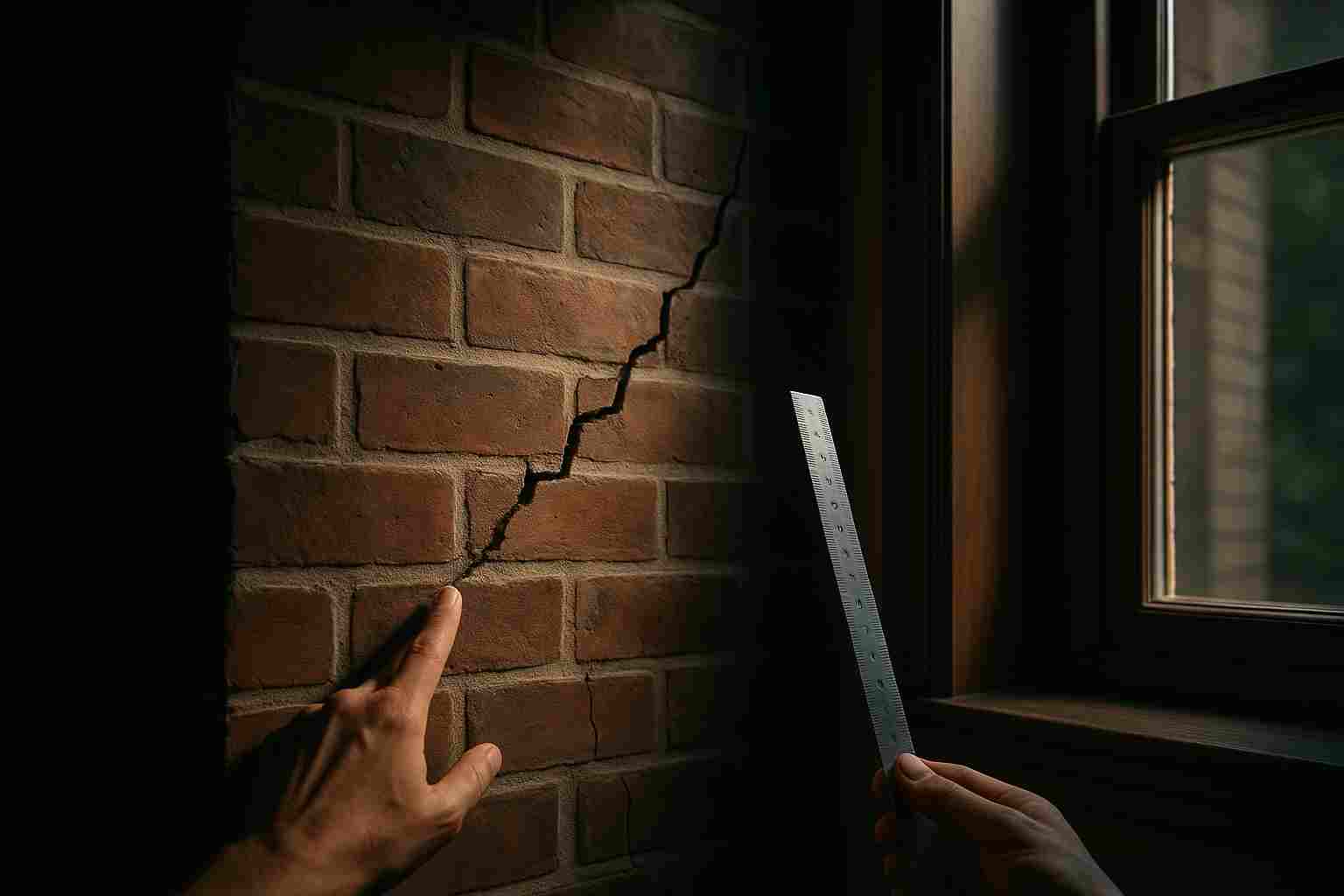
- Foundation movement – In reactive clay, excess moisture causes the soil to swell, lifting the foundation (heave). This can cause severe cracking, jam doors and windows, and distort the entire building frame.
- Erosion – Concentrated water flow can literally wash away the soil that is supporting your footings, causing them to settle or subside.
- Hydrostatic pressure – Water-saturated soil exerts immense pressure against basement and retaining walls, which can cause them to crack, bow, and eventually fail.
- Deterioration – Persistent dampness promotes rising damp, timber decay, and the corrosion of steel reinforcement in concrete (concrete cancer).
Reading the Clues: Common Stormwater Failures We Investigate
An effective stormwater system is a story of continuous, controlled flow away from the building. A failure is any interruption or misdirection in that narrative. Here are the most common flaws we find:
- Downpipes discharging at the foundation – This is a cardinal sin of drainage. A downpipe that simply ends at the base of a wall concentrates thousands of litres of roof water into the small patch of ground where it can do the most damage. All downpipes must be connected to a sealed pipe system that discharges to a legal point of discharge (like the street kerb) or a soakwell located well away from the building.
- Negative grading – The ground around your home should act as a ramp, directing water away. If the ground slopes towards the building, it funnels surface water directly against your foundations.
- Blocked or damaged drains – Underground stormwater pipes that are blocked by tree roots or have been crushed or damaged will cause water to back up and saturate the surrounding soil, often invisibly.
- Lack of surface drainage on sloping sites – On a sloping block, water flowing down the hill must be intercepted by a surface drain (like a "spoon drain") before it reaches the building, and directed around it.
The Principles of a Resilient Drainage Design
Whether you are building new or rectifying an existing property, a robust stormwater management plan is essential. In Victoria, drainage design and discharge are governed by local council and water authority regulations. A professional design will incorporate a multi-layered strategy:
- Roof drainage – Correctly sized gutters and downpipes to handle the roof area and local rainfall intensity.
- Surface drainage – Grading, swales, and surface drains to intercept and redirect surface water flow.
- Sub-surface drainage – Agricultural drains and proper drainage behind retaining walls to manage groundwater.
What This Means for You
A simple visual check of your property after heavy rain can tell you a powerful story. Look for areas where water is pooling against the house, where gutters are overflowing, or where downpipes are discharging onto the ground. These are all signs that your stormwater system is failing and putting your property at risk.
A Story of Prevention
The cost of implementing a proper drainage system is minuscule compared to the potential cost of rectifying major structural damage. Investing in good stormwater management is one of the most cost-effective ways to protect your property investment for the long term. Water will always follow the path of least resistance; the job of a good drainage system is to make sure that path is a safe one, far away from your home.
Concerned about the drainage on your property? Contact AZTA Engineering for a Civil & Drainage Design consultation to ensure your home is protected.
Water is often described as the most destructive force in nature, and nowhere is this more evident than in the damage it can cause to buildings. Poor stormwater management is one of the leading causes of structural issues we encounter in our forensic engineering practice. From foundation movement to wall cracking, roof leaks to mold growth, water-related damage accounts for billions in property damage across Australia each year.
The Critical Importance of Proper Drainage
Effective stormwater management begins with understanding how water interacts with your property. When rain falls on your roof, driveway, and yard, it needs to be directed away from your building's foundation and structural elements. Failure to do so can result in a cascade of problems:
- Foundation movement - Particularly in reactive clay soils, excess moisture can cause swelling and subsequent foundation movement
- Erosion - Concentrated water flow can wash away soil supporting foundations and pavements
- Rising damp - Water accumulation around foundations can lead to capillary action drawing moisture into walls
- Timber decay - Persistent moisture creates ideal conditions for fungal decay in timber elements
- Concrete deterioration - Water penetration can lead to reinforcement corrosion and concrete spalling
- Mold growth - Damp conditions promote mold, creating health hazards and damaging building materials
Common Stormwater Management Failures in Detail
Building on those common warning signs, our forensic investigations regularly uncover these specific stormwater management failures:
1. Inadequate Roof Drainage
Undersized gutters and downpipes that cannot handle heavy rainfall, leading to overflows and water cascading down walls. This is particularly problematic at valley gutters where water from multiple roof planes converges.
2. Improper Downpipe Discharge
Downpipes that discharge directly adjacent to foundations rather than being connected to stormwater systems. This concentrates large volumes of water precisely where it can cause the most damage.
3. Negative Grading
Ground that slopes toward the building rather than away from it, directing surface water toward foundations instead of away from them.
4. Blocked or Damaged Drainage Systems
Stormwater pipes that are blocked by debris, damaged, or have inadequate capacity for the catchment area they serve.
5. Impermeable Surfaces Without Drainage
Large paved areas like driveways and patios that direct water toward buildings rather than to appropriate drainage points.
6. Retaining Wall Failures
Retaining walls without adequate drainage that allow water pressure to build up behind them, leading to structural failure.
Case Study: Drainage Oversight
We recently investigated a case where a homeowner had experienced severe structural damage due to a seemingly minor drainage issue. The property, built on a sloping block with reactive clay soil, had a concrete patio installed along the uphill side of the house. Unfortunately, the patio was installed without proper drainage provisions.
During heavy rainfall, water would pool against the house's foundation, saturating the reactive clay soil. Over several years, this led to significant differential foundation movement, with the uphill side of the house rising substantially compared to the downhill side.
The result was severe structural cracking throughout the home, doors and windows that wouldn't close, and a visibly sloping floor. The remediation required underpinning, extensive crack repairs, and installation of a proper drainage system. All due to a drainage oversight that could have been corrected for less than $5,000 during the patio installation.
Effective Stormwater Management Solutions
Proper stormwater management involves a systematic approach to water collection and disposal:
1. Roof Drainage
- Appropriately sized gutters and downpipes for the roof area and local rainfall intensity
- Regular cleaning and maintenance of gutters and downpipes
- Gutter guards in areas with heavy leaf fall
- Overflow provisions for extreme rainfall events
2. Surface Drainage
- Grading that directs water away from buildings (minimum 1:50 slope for at least 1.5m)
- Swales or surface drains to intercept water on sloping sites
- Permeable paving options that allow water infiltration
- Retention of vegetation to slow water flow and promote absorption
3. Subsurface Drainage
- Agricultural (ag) drains where required
- Properly designed weepholes and drainage systems for retaining walls
- Subsoil drainage for landscaped areas
4. Stormwater Detention and Retention
- Rainwater tanks to capture and reuse roof water
- Detention systems to slow the release of stormwater during heavy rainfall
- Rain gardens and bioswales to filter and absorb runoff
- Permeable paving systems that allow water infiltration while providing usable surfaces
Regulatory Requirements and Compliance
Stormwater management is subject to various regulatory requirements:
- Local council regulations regarding stormwater discharge
- Building code requirements for roof drainage design
- Environmental protection regulations regarding water quality
- Water authority requirements for connections to stormwater systems
Non-compliance can result in legal liability for damage to neighboring properties, council enforcement action, and insurance claim rejections. It's essential to ensure that any drainage work complies with all relevant regulations and standards.
Professional Assessment and Design
For new construction or remediation of existing drainage issues, professional assessment and design are invaluable. A qualified civil or drainage engineer can:
- Assess site conditions and identify potential drainage issues
- Calculate appropriate sizes for drainage infrastructure based on catchment areas and rainfall data
- Design integrated drainage systems that address all aspects of stormwater management
- Provide documentation for council approval and construction
- Inspect installations to ensure compliance with design intent
Maintenance: The Key to Long-Term Performance
Even the best-designed drainage system will fail without proper maintenance. Regular maintenance should include:
- Cleaning gutters and downpipes at least twice yearly
- Checking and clearing surface drains of debris
- Inspecting and flushing subsurface drainage systems
- Monitoring for signs of water pooling or erosion
- Promptly addressing any identified issues
Conclusion: Prevention is Better Than Cure
When it comes to stormwater management, prevention is infinitely preferable to remediation. The cost of implementing proper drainage measures during construction or renovation is minimal compared to the potential cost of structural damage from water issues.
At AZTA Engineering, we've seen countless cases where simple drainage improvements could have prevented major structural damage. Whether you're building, renovating, or addressing existing issues, investing in proper stormwater management is one of the most cost-effective ways to protect your property investment.
Remember: water always wins in the end. The question is whether you'll direct it safely away from your building or let it dictate where and how damage occurs.
AK
Forensic Structural Engineer at AZTA Engineering with over 7 years of experience in structural investigation and building assessment across Australia.
Related Articles
Is Your Soil Silently Damaging Your Home's Foundation? A Guide to Reactive Clay
Foundation Engineering • 7 min read
What is This Ugly Stain? A Homeowner's Guide to 'Concrete Cancer' (Spalling)
Structural Deterioration • 8 min read
The 5 Telltale Signs of Foundation Issues We See Most Often in Residential Homes
Foundation Engineering • 8 min read