

The 5 Telltale Signs of Foundation Issues We See Most Often in Residential Homes
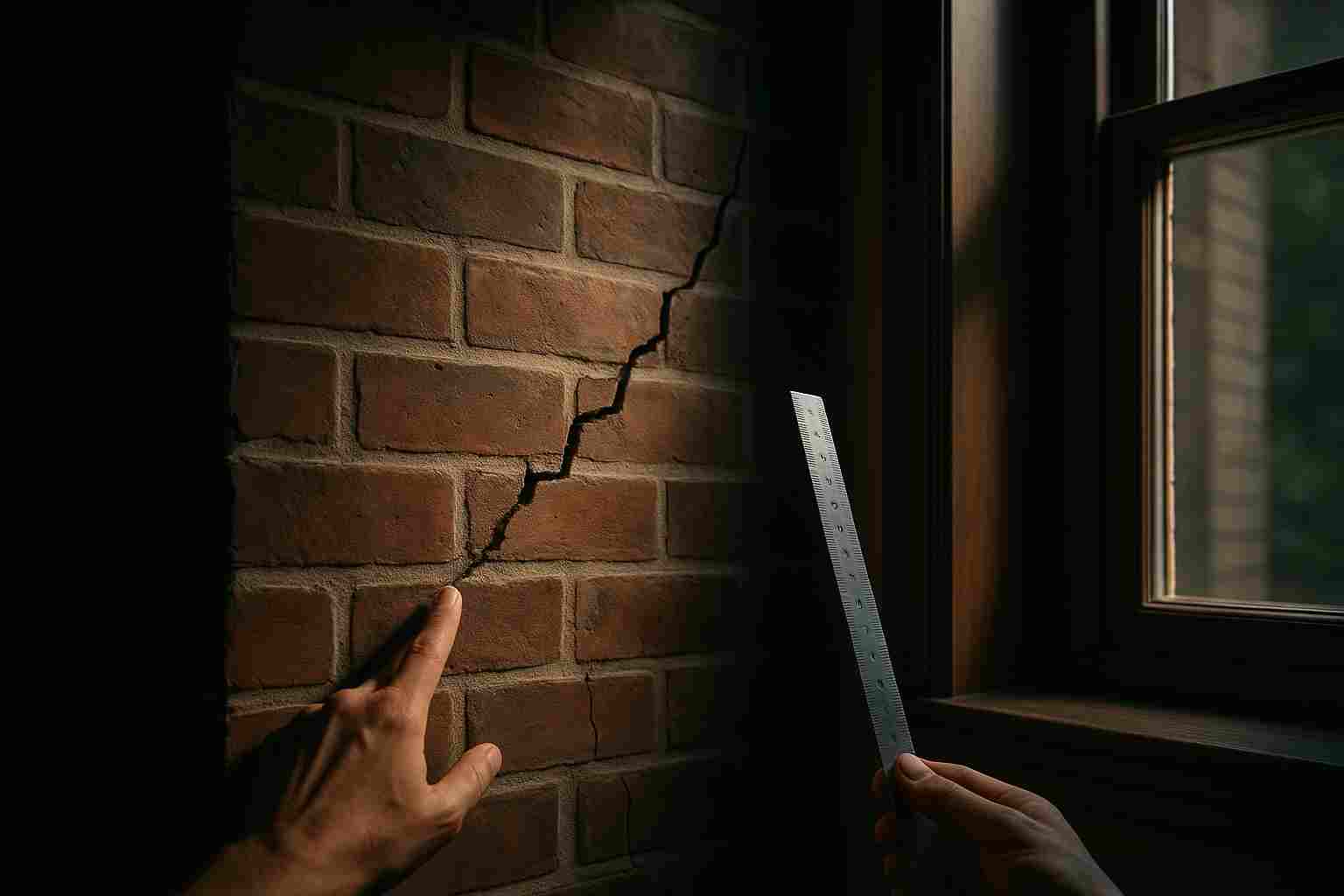
It’s a quiet, sinking feeling that many homeowners experience. A feeling that something is just not right with their house. It might start with a door that suddenly refuses to latch, or a hairline crack that appears above a window frame. Your home is your biggest investment and your sanctuary, and the thought that its very foundation might be compromised is a source of immense anxiety.
At AZTA Engineering, we believe your house is trying to communicate with you. These small, seemingly isolated issues are often chapters in a larger story—a story about the ground beneath your feet and the immense forces your home endures every day. As forensic engineers, our job is to read that story. Here are the five most common signs we see that indicate a building is telling us its foundation needs attention.
Sign 1: Cracks That Tell a Story of Stress
Not all cracks are created equal. While fine, hairline cracks can be a normal part of a new home settling, certain patterns are direct evidence of foundation movement.
The most significant clue is a diagonal, stepped crack in brickwork or a concrete block wall, often starting from the corners of windows or doors and moving outwards. These cracks typically follow the mortar lines, looking like a staircase ascending or descending the wall. This pattern is a classic symptom of differential settlement or subsidence, which means one part of your foundation is moving downwards at a different rate from another. Imagine holding a rectangular biscuit and pushing one corner down; it will snap diagonally, which is precisely what is happening to your wall.
According to Australian Standard AS 2870, cracks wider than 5 mm are classified as “Moderate” damage and warrant a professional investigation.
Sign 2: Doors and Windows That Suddenly Stick or Have Gaps
You might blame the humidity or a loose hinge when a door starts sticking or a window becomes difficult to open. But often, it is a far more significant message. When a home's foundation shifts, it twists and distorts the entire structural frame—including the perfectly square openings for your doors and windows.
This distortion can cause several telltale signs:
- Doors that jam at the top or drag on the floor.
- Doors that will not latch properly without being forced.
- Visible, uneven gaps around window frames or door jambs.
- Cracks appearing in the plasterboard at the corners of door and window frames.
These are not simple carpentry issues; they are evidence that the entire frame is being squeezed out of shape by forces from below.
Sign 3: Sloping, Bowing, or Uneven Floors
Your floors should be level. If you have noticed a distinct slope in a room, or if furniture seems to sit at an angle, your foundation is sending a clear signal.
A simple way to check this is the “marble test.” Place a marble or a small ball on the floor in several areas of your home. If it consistently rolls in one direction, it indicates the floor is no longer level.
This can be caused by one part of the foundation subsiding, or by a phenomenon common in Australian homes built on reactive clay soil known as “doming” or “dishing.” This occurs when the moisture content of the soil under the centre of your home is different from the moisture at the edges, causing the slab to either dome upwards in the middle or dish downwards.
Sign 4: Gaps Where Walls Meet Floors, Ceilings, or Other Walls
As your foundation moves, it can pull different parts of your house apart. This often manifests as new or widening gaps in places that should be tightly joined.
Pay close attention to:
- The junction where an extension meets the original house. A vertical crack or gap here is a classic sign of differential movement, as the new foundation settles at a different rate to the old one.
- Gaps appearing between the bottom of your skirting boards and the floor.
- Separation between your wall and the ceiling cornice.
- Cracks or separation in vinyl or tiled floors, which can indicate movement in the concrete slab beneath.
These gaps are physical evidence that parts of your home are moving independently of one another, a clear story of foundational instability.
Sign 5: Water Pooling Near the Foundation
Sometimes, the most important clue about a foundation problem is not in the building itself, but in the ground around it. Water is the primary driver of foundation issues, especially in homes built on reactive clay soils.
Excess moisture causes clay soil to swell and lose strength, while excessive dryness causes it to shrink and pull away from the foundation. Therefore, any sign of poor drainage or water management is a major red flag. Look for:
- Water pooling against the foundation walls after rain.
- Leaking taps, downpipes, or broken stormwater drains near the house.
- Garden beds right up against the house that are frequently watered.
- Unusually green or lush patches of lawn in one area, which can indicate a leaking underground pipe.
These water-related issues are not just maintenance problems; they are active threats to your foundation's stability.
From Clues to Clarity
These five signs are the visible chapters of a story that is unfolding within your property's structure and the ground it rests upon. They are clear communications that should not be ignored. While they can help you identify that a problem exists, they do not reveal the full story of why it is happening or what the ultimate solution should be.
A definitive diagnosis requires an expert to piece all the evidence together—the cracks, the sticking doors, the soil type, the site drainage—to uncover the root cause. This is how we transform the anxiety of uncertainty into the confidence of a clear, actionable plan.
If your home is telling you one of these stories, it is time to listen. Contact AZTA Engineering to book a Pre-Purchase or General Structural Inspection and let our experts provide the clarity you need.
AK
Forensic Structural Engineer at AZTA Engineering with over 7 years of experience in structural investigation and building assessment across Australia.
Related Articles

Is Your Soil Silently Damaging Your Home's Foundation? A Guide to Reactive Clay
Foundation Engineering • 7 min read
Your Property's Most Important System: A Homeowner's Guide to Stormwater Management
Civil Engineering • 9 min read
What Story is That Crack in Your Wall Telling You? A Homeowner's Guide
Forensic Engineering • 8 min read
What is This Ugly Stain? A Homeowner's Guide to 'Concrete Cancer' (Spalling)
Structural Deterioration • 8 min read