
Case Study: How a Drainage Design Flaw Led to Major Structural Damage
Every building tells a story. Sometimes it is dramatic—a storm, a fire, an earthquake. More often, it whispers. A faint musty smell. A tiny patch of damp. A hairline crack that appears from nowhere.
This is one of those whispered stories. A seemingly minor issue drew our forensic engineering team into an investigation that uncovered a critical drainage design flaw silently exerting immense pressure on a family home. Left unresolved, it was twisting the structure and undermining the very foundation that should keep the occupants safe.
The Call: A Mystery in the Basement
The first call from the homeowner sounded routine. A persistent damp patch had emerged on the inside of a basement wall, accompanied by a fine diagonal crack. They suspected a plumbing leak and needed clarity before the damage escalated.
On arrival, the symptoms matched the description: a crack less than 2 mm wide, a localized damp patch, nothing overtly dramatic. For many, the advice would have stopped at monitoring the crack or applying a new sealant. But our forensic site inspections are designed to probe beyond the obvious. We knew the story likely started outside the basement.
The Investigation: Following the Clues Outside
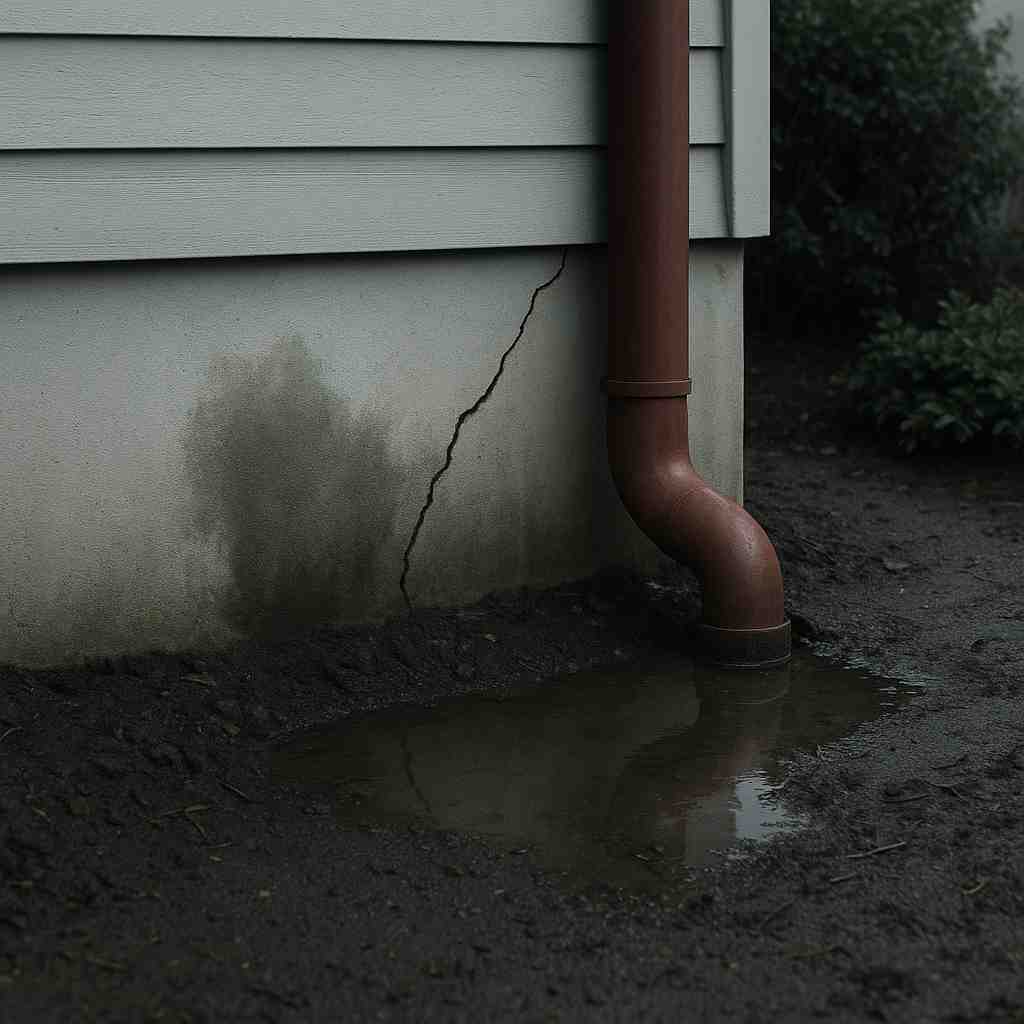
Expanding the inspection to the exterior revealed the first clues. The property sat on a gentle slope, and a lush garden bed hugged the affected wall. A roof downpipe disappeared directly into the soil beside the bed, with clear staining that hinted at overflow. The landscape was beautiful—but the water management story was suspicious.
Collectively, the slope, the garden bed, and the downpipe painted a picture of concentrated moisture. The question became: where was the water going once it left the roof? To answer it, we traced the stormwater system, reviewed the council-approved plans, and engaged CCTV drain inspection equipment.
The Discovery: Reading the Site's Story
The approved drainage plans showed the downpipe connecting to a sealed underground line that discharged to the street kerb. Reality told a different tale. Landscaping works had altered the connection, leaving the downpipe effectively discharging straight into the soil. Every rainfall event was injecting roof runoff right beside the basement wall.
The CCTV inspection confirmed the disconnection. For years, the surrounding soil had been super-saturated. What looked like a minor damp patch inside was the final chapter of a much longer story of hydraulic pressure building outside.
The Analysis: Connecting Water to Cracks
The property was founded on moderately reactive clay—soil that swells dramatically when wet and contracts when it dries. The uncontrolled roof water created a zone of extreme moisture next to the foundation. The clay swelled, exerting upward and lateral pressure on the basement wall and footing. Engineers call it “heave,” and the result was differential movement twisting the structure. The diagonal crack was simply the visible evidence of a distorted foundation system.
By combining moisture readings, crack monitoring, and a review of historic weather patterns, we demonstrated the cause-and-effect relationship between the drainage failure and the structural distress. The science matched the symptoms, giving the homeowner clarity and a roadmap to remediation.
The Solution: An Integrated, Three-Part Plan
A problem that touches the site, the structure, and the insurance process demands a solution that addresses all three. A quick cosmetic repair would have reopened within weeks. Instead, we delivered a coordinated program.
1. Redirect the Water
Our civil engineers designed a compliant replacement connection to safely convey roof water to the legal point of discharge, including surface grading improvements and overflow provisions. The plan drew on our drainage design service to ensure every drop was controlled before it could reach the foundation.
2. Stabilise the Structure
With moisture brought under control, we specified staged crack stitching, waterproofing upgrades, and footing remediation to relevel the affected portion of the basement. Working alongside trusted contractors, our structural design specialists ensured the repair methodology protected both safety and serviceability.
3. Document the Evidence
Finally, we prepared a comprehensive forensic report that linked the non-compliant drainage, the soil response, and the structural damage. This expert evidence gave the homeowner the confidence to progress an insurance claim and allocate budgets for staged rectification. It is the level of documentation our forensic investigation team produces on every complex brief.
By treating the cause, not just the symptoms, the property’s structural performance stabilised. Moisture readings normalised, and follow-up surveys confirmed the basement wall was no longer being forced out of alignment.
A Complete Story, A Complete Solution
This case demonstrates that every component of a building is connected. Surface water management, soil behaviour, and structural performance are part of one narrative. When any chapter is rewritten without proper engineering oversight, the whole story can change—with expensive consequences.
If you suspect a hidden issue in your home, don’t wait for minor clues to turn into major failures. Contact AZTA Engineering to arrange a forensic investigation, or schedule a targeted site inspection for rapid on-the-spot advice. We read the evidence, diagnose the root cause, and guide the remediation so your home’s story has a stable ending.
AK
Forensic Structural Engineer at AZTA Engineering with over 7 years of experience in structural investigation and building assessment across Australia.
Related Articles

Is Your Soil Silently Damaging Your Home's Foundation? A Guide to Reactive Clay
Foundation Engineering • 7 min read
Your Property's Most Important System: A Homeowner's Guide to Stormwater Management
Civil Engineering • 9 min read
What Story is That Crack in Your Wall Telling You? A Homeowner's Guide
Forensic Engineering • 8 min read
What is This Ugly Stain? A Homeowner's Guide to 'Concrete Cancer' (Spalling)
Structural Deterioration • 8 min read
The 5 Telltale Signs of Foundation Issues We See Most Often in Residential Homes
Foundation Engineering • 8 min read