
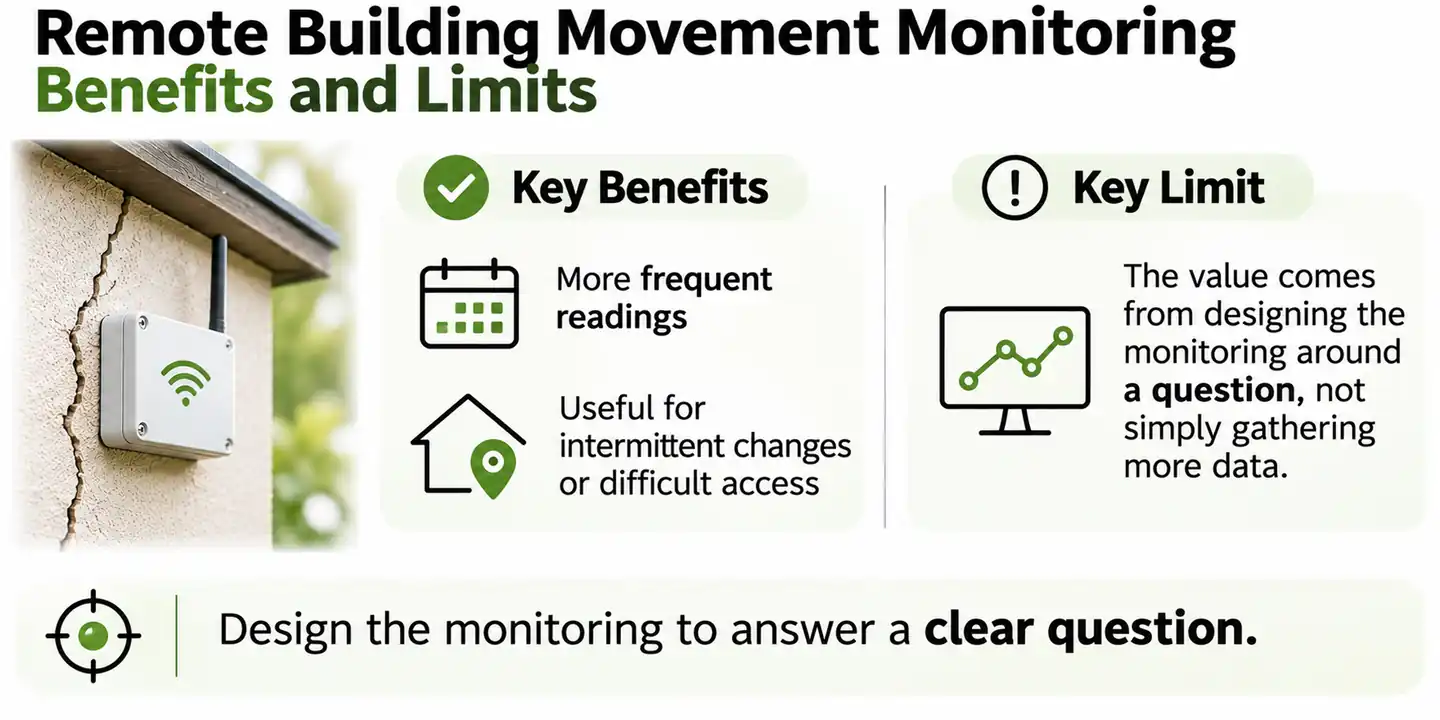
Remote Building Movement Monitoring Benefits and Limits
Property managers and building professionals
Remote sensors can take more frequent readings without a visit each time, which helps where changes are intermittent or access is difficult. The value comes from designing the monitoring around a question, not simply gathering more data.
If cracking or movement is affecting your property, explore our investigation of cracking and building movement. An article cannot determine the cause or appropriate solution for an individual property.
Define the decision the data must support
When considering remote monitoring for suspected subsidence, start by asking what movement needs to be detected, where it should be measured and what the reading is meant to establish.
One monitored crack may not represent the whole building. Choose points with the structural arrangement and suspected mechanism in mind. More data cannot make an unsuitable point useful.
Include the influences on measurement
Temperature and other environmental conditions can affect readings. Check sensor attachment, the stability of reference points and whether the data are continuous. Interpret the readings alongside evidence about the building and ground.
A competent reviewer needs to separate meaningful trends from equipment faults, noise and expected variations. A chart made from automatic readings does not automatically explain cause or establish safety.
Plan for gaps and unexpected readings
Agree who receives alerts, how data gaps will be noticed and what happens if an unexpected reading appears. Losing the connection does not mean movement stopped. Check anomalous results against the installation and other observations.
If a property manager receives an abrupt sensor change, the agreed response should say how to verify and escalate it. One reading does not establish collapse, and last week's chart does not establish current safety.
Compare value with the investigation need
Compare the cost of equipment, installation, data management and professional interpretation. Remote readings can reduce some visits but do not replace inspections or ground investigations where those are needed.
Ask what the system would add to periodic readings and where its limits are. Keep the raw data, monitoring point map and interpretation reports so a new owner or professional can use the history.
Useful Next Steps
- State the engineering question before selecting sensors.
- Agree monitoring points, environmental records and how to verify unusual results.
- Assign responsibility for alerts and missing data.
- Compare the value of the full programme, not just how many visits it might save.