

The Hidden Force: How a Hot Day Can Crack Your Walls (A Guide to Thermal Movement)
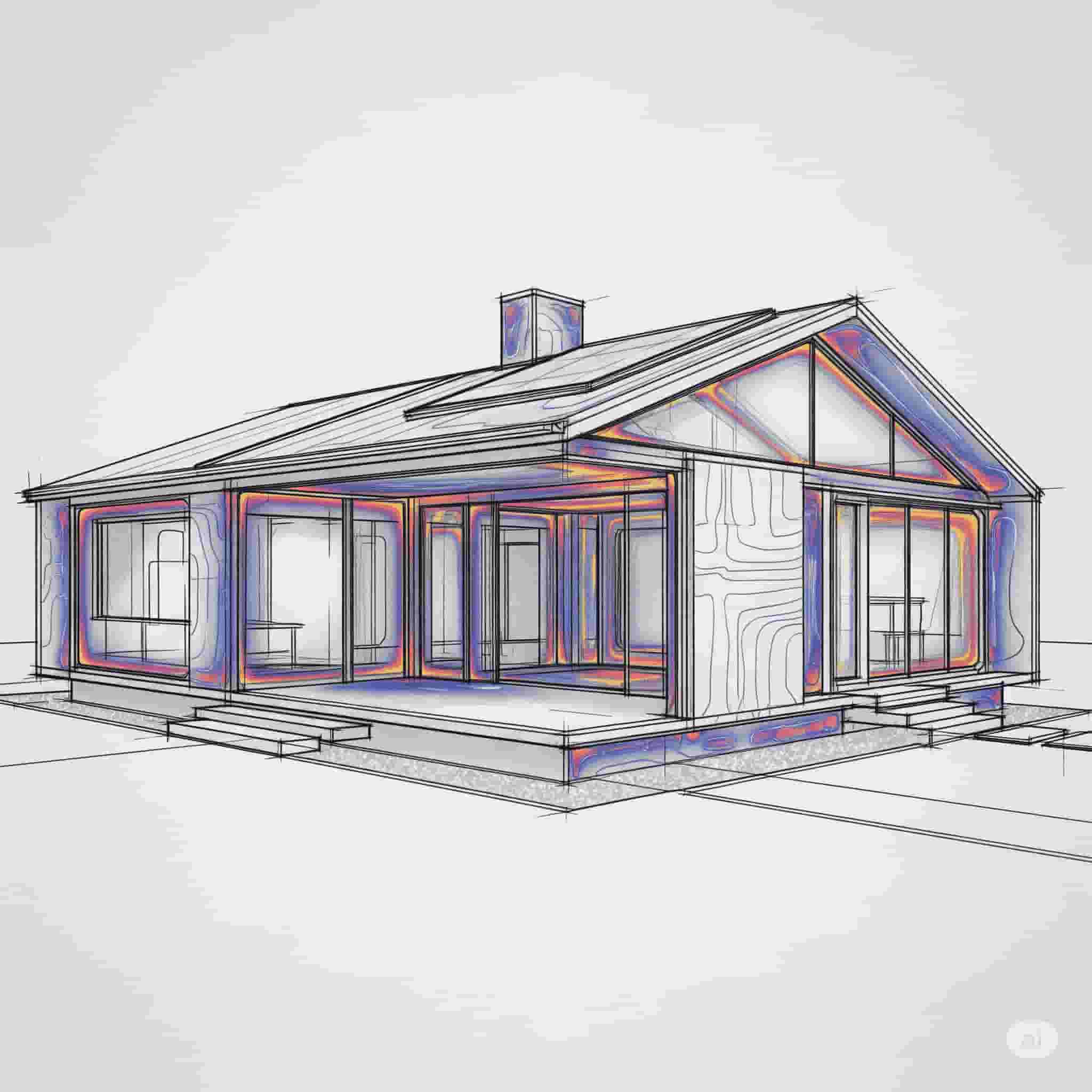
We tend to think of our buildings as static and immovable. But in reality, they are constantly, subtly, breathing. With every sunrise and sunset, and with the passing of the seasons, the materials that form your home are expanding and contracting in response to temperature changes. This powerful, invisible process is known as thermal movement.
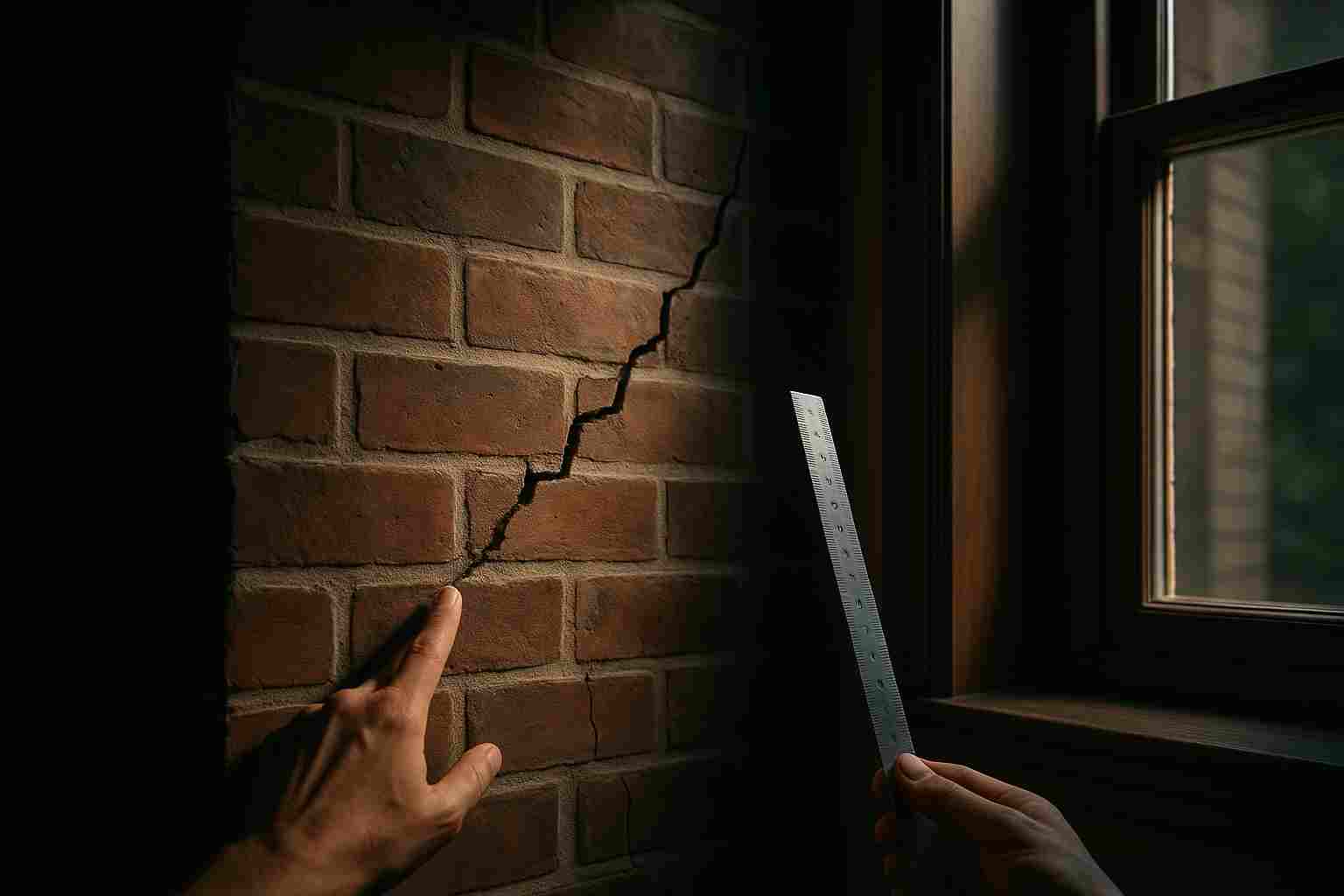
When this movement is properly accounted for in a building’s design, it happens harmlessly. But when it is not, the immense internal stresses can build up to a point where the structure is forced to relieve the pressure—often by forming a large, vertical crack down the face of a wall. As forensic engineers, we are often called to read the story of these cracks, which tell a tale of a fundamental force of physics that was not respected during design or construction.
The Expert Translation: How Does Thermal Movement Work?
The principle is simple: most materials expand when they heat up and contract when they cool down. The amount they move is related to their "coefficient of thermal expansion." Different materials move at different rates—steel and concrete, for example, expand at a similar rate, which is why they work so well together. Brickwork, however, expands at a different rate.
An Everyday Analogy
Think of a long steel railway track on a scorching summer day. To prevent the track from buckling under the immense force of thermal expansion, engineers leave small gaps at the joints between sections of rail. These gaps give the steel a place to expand into safely.
Buildings need these gaps too. They are called expansion joints or control joints.
The Story a Crack Tells: Identifying Thermal Movement Damage
Damage from thermal movement has a very distinct signature. Unlike the diagonal, stepped cracks associated with foundation settlement, thermal movement cracks are typically:
- Vertical and Straight: The crack will often run straight down a wall, sometimes for its full height.
- Located Near the Middle of Long Walls: The greatest amount of expansion occurs in the middle of a long, uninterrupted stretch of brickwork, so this is where the stress concentrates and the crack often forms.
- Wider at the Top: The top of a wall is less restrained than the base, so it can move more freely, often resulting in a crack that is wider at the top and tapers towards the bottom.
- Cyclical: The crack may appear to open and close slightly with the seasons, being wider in summer and finer in winter.
This type of cracking is most common on long walls that have a strong northern or western orientation, as these elevations experience the greatest temperature swings from solar radiation.
Designing for Resilience: How Engineers Prevent Thermal Damage
Preventing thermal damage is a core part of good structural design and is mandated by Australian Standards. The primary tool is the provision of correctly spaced vertical expansion joints.
According to building codes, a long brick wall needs a 10mm gap, sealed with a flexible sealant, at regular intervals to allow the masonry to expand and contract without building up stress. For standard clay brickwork, an expansion joint is typically required every 10-12 metres.
The National Construction Code (NCC) has also introduced new requirements to account for thermal bridging, particularly in steel-framed homes, to ensure energy efficiency ratings are accurate and reflect how heat moves through the structure. This acknowledges that thermal performance and physical movement are two sides of the same coin.
What to Do About a Thermal Crack?
If you have a large vertical crack in a long brick wall, it is telling a clear story that the building does not have adequate provision for thermal movement. While a single crack is not usually a sign of impending structural collapse, it does need to be addressed.
Investigation
An engineer should assess the situation to confirm that thermal movement is the cause and to determine the best course of action.
Remediation
The solution often involves retrofitting an expansion joint. This is done by saw-cutting a clean, vertical joint through the brickwork at or near the location of the crack. The new joint is then filled with a backing rod and a flexible sealant. The original crack is then repaired. This process relieves the stress in the wall and prevents future cracking.
Listening to the Laws of Physics
The story of a thermal crack is a powerful reminder that our buildings are dynamic structures that must be designed to work with the forces of nature, not against them. By understanding and respecting the simple principle of thermal expansion, engineers can design resilient, durable buildings that can breathe with the seasons and stand for a century without cracking under the pressure.
Have you noticed a large vertical crack in an external wall? Contact AZTA Engineering for a Forensic Site Inspection to get a clear diagnosis from an expert.
Thermal movement is one of the most underestimated causes of building failures, yet it affects every structure exposed to temperature variations. As materials heat up, they expand; as they cool down, they contract. While this fundamental principle seems simple, the reality of thermal movement in complex building systems can lead to significant structural problems, costly repairs, and ongoing maintenance issues. Our forensic investigations regularly reveal thermal movement as a contributing factor in building failures across Australia.
Understanding Thermal Movement
All building materials expand and contract with temperature changes, but the amount of movement varies significantly between different materials. The coefficient of thermal expansion determines how much a material will change in dimension for each degree of temperature change. Understanding these differences is crucial for preventing thermal-related failures.
Typical Coefficients of Thermal Expansion (per °C)
- Steel: 12 × 10⁻⁶
- Concrete: 10-14 × 10⁻⁶
- Aluminum: 23 × 10⁻⁶
- Timber (along grain): 3-5 × 10⁻⁶
- Timber (across grain): 30-70 × 10⁻⁶
- Masonry: 5-8 × 10⁻⁶
- Glass: 9 × 10⁻⁶
These seemingly small numbers can result in significant movement over the length of a building. For example, a 50-meter long concrete structure experiencing a 40°C temperature change will expand or contract by approximately 20-28mm.
Common Thermal Movement Problems
Differential Movement
Problems arise when different parts of a structure experience different temperature changes or when materials with different expansion coefficients are rigidly connected. Common scenarios include:
- Roof structures exposed to direct sunlight while walls remain in shade
- Different materials connected without allowing for movement
- Long structures without adequate expansion joints
- Cladding systems with inadequate movement accommodation
Restraint of Movement
When thermal movement is restrained, significant stresses develop that can exceed the material's capacity, leading to:
- Cracking in concrete and masonry
- Buckling of steel elements
- Failure of connections and joints
- Distortion of structural elements
Design Strategies for Thermal Movement
Movement Joints
Expansion joints are the primary method for accommodating thermal movement:
- Spacing: Joints should be spaced to limit movement to manageable amounts
- Location: Joints should be located at natural break points in the structure
- Design: Joints must accommodate the calculated movement while maintaining weather resistance
- Maintenance: Joint sealants require regular inspection and replacement
Flexible Connections
Connections between different materials or structural elements should allow for differential movement:
- Sliding connections that permit movement in one direction
- Flexible gaskets and sealants
- Slotted bolt holes to allow adjustment
- Bellows joints in piping and ductwork
Material Selection
Choosing materials with compatible thermal properties can minimize differential movement:
- Using materials with similar expansion coefficients
- Selecting light-colored finishes to reduce heat absorption
- Incorporating insulation to reduce temperature variations
- Using composite materials designed for thermal stability
Specific Applications and Considerations
Concrete Structures
Concrete structures are particularly susceptible to thermal cracking:
- Early-age cracking: Rapid cooling after placement can cause thermal cracking
- Long-term movement: Daily and seasonal temperature cycles cause ongoing movement
- Reinforcement restraint: Steel reinforcement can restrain concrete movement, causing cracking
- Joint spacing: Expansion joints should be provided at 15-30m intervals
Steel Structures
Steel's high coefficient of expansion requires careful consideration:
- Connection design: Connections must accommodate movement without failure
- Bracing systems: Thermal movement can affect the stability of bracing systems
- Fire protection: Thermal movement during fires can cause connection failures
- Composite construction: Different movement rates between steel and concrete must be considered
Masonry Construction
Masonry is relatively brittle and prone to thermal cracking:
- Control joints: Vertical control joints should be provided at regular intervals
- Bed joint reinforcement: Can help distribute thermal stresses
- Cavity walls: The cavity can accommodate some differential movement
- Thermal bridging: Should be minimized to reduce temperature variations
Cladding Systems
External cladding experiences the greatest temperature variations:
- Panel size: Smaller panels reduce individual movement amounts
- Joint design: Joints must accommodate movement while maintaining weather resistance
- Fixing systems: Must allow movement while maintaining structural connection
- Color selection: Light colors reduce heat absorption and thermal movement
Calculation of Thermal Movement
Accurate calculation of thermal movement is essential for proper design:
Basic Formula
ΔL = α × L × ΔT
Where:
- ΔL = change in length
- α = coefficient of thermal expansion
- L = original length
- ΔT = temperature change
Design Temperature Ranges
Australian conditions require consideration of extreme temperatures:
- Air temperature: -10°C to +50°C in most locations
- Surface temperature: Can exceed 70°C for dark surfaces in direct sunlight
- Structural temperature: Usually less extreme than surface temperature
- Installation temperature: The temperature at which the structure is built affects subsequent movement
Monitoring and Assessment
For existing structures showing signs of thermal movement problems:
Visual Inspection
- Cracking patterns that suggest thermal movement
- Failed sealant joints
- Distorted structural elements
- Gaps or compression at joints
Remediation of Thermal Movement Problems
When thermal movement problems occur, remediation strategies include:
Joint Installation
- Cutting new expansion joints in existing structures
- Installing flexible joint systems
- Upgrading existing joints with higher movement capacity
Maintenance and Long-term Performance
Thermal movement accommodation systems require ongoing maintenance:
- Joint sealants: Regular inspection and replacement every 5-10 years
- Movement monitoring: Periodic measurement of joint movement
- Cleaning: Removal of debris that could restrict movement
- Adjustment: Modification of systems as building performance changes
Conclusion
Thermal movement is an inevitable aspect of building performance that must be properly addressed in design, construction, and maintenance. Failure to accommodate thermal movement can lead to significant structural problems, costly repairs, and ongoing performance issues.
At AZTA Engineering, our forensic investigations of thermal movement failures inform our approach to both problem diagnosis and prevention. We understand how thermal stresses develop and use this knowledge to help clients design effective solutions that accommodate movement while maintaining structural integrity and weather resistance.
Remember: thermal movement never stops. Buildings that don't accommodate this movement will eventually develop problems. Proper design and maintenance of movement accommodation systems is essential for long-term building performance.
AK
Forensic Structural Engineer at AZTA Engineering with over 7 years of experience in structural investigation and building assessment across Australia.
Related Articles

Is Your Soil Silently Damaging Your Home's Foundation? A Guide to Reactive Clay
Foundation Engineering • 7 min read
Your Property's Most Important System: A Homeowner's Guide to Stormwater Management
Civil Engineering • 9 min read
What Story is That Crack in Your Wall Telling You? A Homeowner's Guide
Forensic Engineering • 8 min read
What is This Ugly Stain? A Homeowner's Guide to 'Concrete Cancer' (Spalling)
Structural Deterioration • 8 min read
The 5 Telltale Signs of Foundation Issues We See Most Often in Residential Homes
Foundation Engineering • 8 min read